Spearmint
Sweet and rounded, with less bite than peppermint. Holds its green character when steeped briefly.
- Bright
- Pairs with apple peel
Every recipe is only as clear as the ingredients behind it. These profiles describe how each herb tastes, what it pairs with, and how we store it. Read them as general culinary notes.
Flavour first. Each card describes the character of the dried ingredient and a pairing we have enjoyed.
Sweet and rounded, with less bite than peppermint. Holds its green character when steeped briefly.
Soft, faintly honeyed flowers with a hay-like aroma. A gentle base that lets other notes sit on top.
Tart and deeply ruby-coloured. A little goes a long way; we use it for colour and a clean, sharp edge.
Lightly citrus and herbaceous. Fades if over-steeped, so we keep it to shorter pours.
Sweet and faintly aniseed. Lightly cracked before brewing to release its aroma into the cup.
Warm and lively when dried and sliced thin. Used sparingly so it supports rather than dominates.
Blending is mostly about balance. We think of each cup as having a base, a lift, and an accent, and we try not to crowd any one of them.
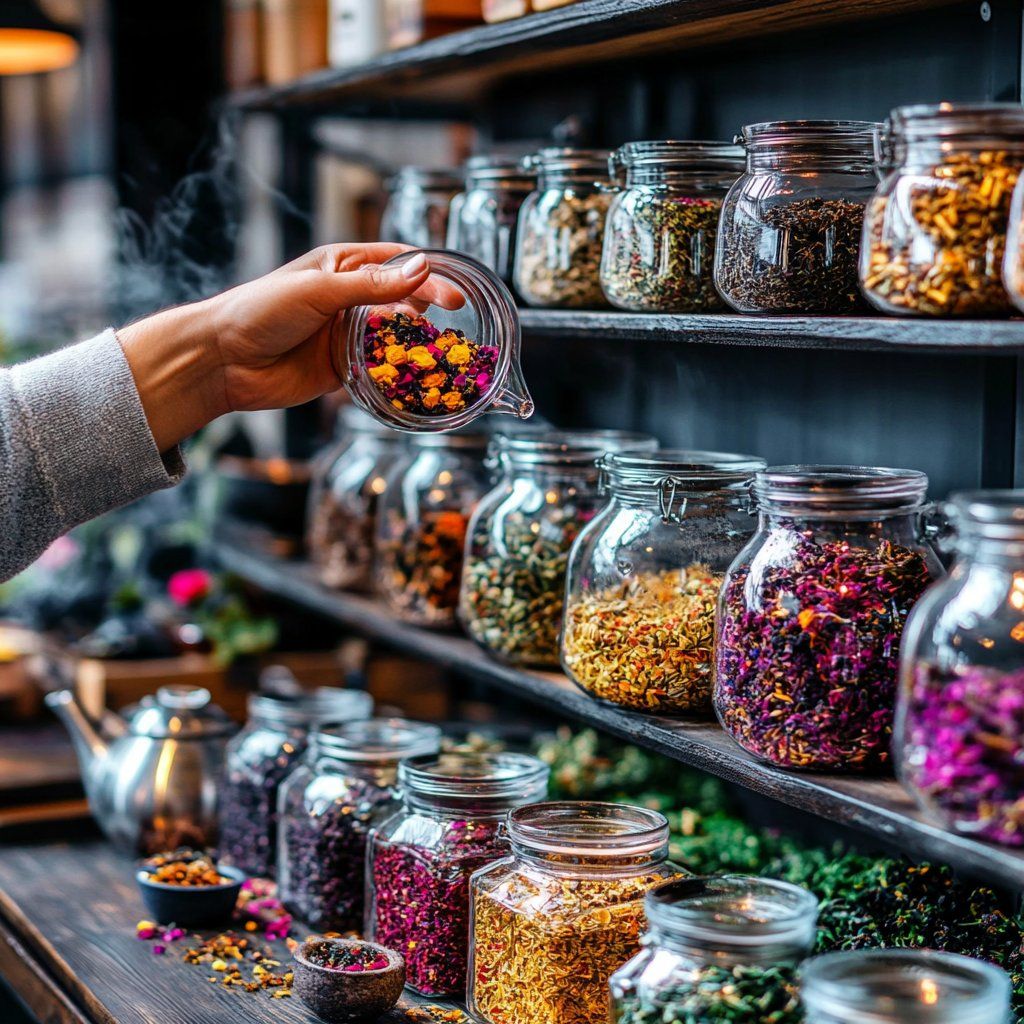
Sunlight fades both colour and aroma. We keep jars in a closed cupboard.
Clamp-lid jars or sealed tins hold the volatile aromas in far better than open bags.
We write the month on every jar. Most leaves and flowers taste best within a year.
We crush seeds and break peel just before brewing rather than ahead of time.
These descriptions are culinary and sensory. They cover flavour, aroma, and pairing only, and are intended as general information for people who enjoy making tea at home.
Our brewing notes cover water, ratios, and timing for the ingredients on this page.
Read the brewing notes